
Today, April 22, 2026, at 09:15:54, biology encompasses the study of life, from cellular processes to ecosystems, across diverse Indian time zones.
Understanding biological organization, from molecules to organisms, is crucial, as evidenced by recent CBSE Class 12 Biology exams concluded at 1:30 PM.
Time and location – like Kerala’s Thiruvananthapuram or Maharashtra’s Pune – influence life’s rhythms, mirroring the dynamic nature of biological study.
A. Defining Biology and its Scope
Biology, at its core, is the scientific study of life – a vast and intricate field encompassing everything from the microscopic world of molecules to the global scale of ecosystems. Its scope is remarkably broad, investigating the structure, function, growth, origin, evolution, and distribution of living organisms.
Considering the current date, April 22, 2026, and the diverse time zones within India – from Thiruvananthapuram to Hyderabad – highlights the geographical context of life’s study. The recent completion of the CBSE Class 12 Biology exam underscores the importance of this foundational science in education.
The field extends beyond simply describing life; it seeks to explain the underlying mechanisms that govern it. This includes understanding energy flow, genetic inheritance, and the interactions between organisms and their environment. Analyzing student feedback on the exam, like the CBSE Class 12 Biology Paper Analysis 2024, provides insight into current learning challenges.
B. Characteristics of Living Organisms
Living organisms, regardless of location – be it Kochi, Chennai, or Jodhpur – share several defining characteristics. These include organization, exhibiting complex structures; metabolism, utilizing energy; growth, increasing in size; adaptation, evolving to suit environments; response to stimuli, reacting to changes; reproduction, creating new organisms; and homeostasis, maintaining internal balance.
The precise time, April 22, 2026, 09:15:54, is irrelevant to these fundamental properties. Observing life across India, with its varying climates and ecosystems, demonstrates adaptation in action. The recent CBSE Class 12 Biology exam likely tested students on these core concepts.
Understanding these characteristics is crucial for differentiating between living and non-living things. Even viruses, though debated, exhibit some of these traits, prompting ongoing study. These principles apply universally, from the smallest microbe to the largest whale.
C. Levels of Biological Organization
Biological organization unfolds across hierarchical levels, starting with atoms and molecules, building to cells – the basic unit of life. These cells form tissues, which comprise organs, working together in organ systems. These systems integrate to create an organism, interacting with others to form populations, communities, ecosystems, and ultimately, the biosphere.
Considering India’s diverse regions – Hyderabad, Kolkata, or Thiruvananthapuram – illustrates this organization. Each city’s population forms a community within its ecosystem. The current time, April 22, 2026, 09:15:54, doesn’t alter this structure.
The CBSE Class 12 Biology curriculum emphasizes this hierarchy; Understanding these levels is vital for comprehending complex biological processes and interdependencies within life.
II. Basic Biochemistry
Biochemistry, vital for life, explores water, carbohydrates, lipids, proteins, and nucleic acids – mirroring processes studied during the CBSE exam on April 22, 2026.
A. Chemical Composition of Living Matter (Water, Carbohydrates, Lipids, Proteins, Nucleic Acids)
Living organisms are fundamentally chemical systems, with specific molecules crucial for life’s processes. Water, comprising a large percentage of cells, acts as a solvent and participates in reactions. Carbohydrates provide energy and structural support, while lipids store energy and form cell membranes.
Proteins are the workhorses of the cell, catalyzing reactions, transporting molecules, and providing structural components. Nucleic acids – DNA and RNA – store and transmit genetic information, essential for heredity, as explored in recent CBSE studies on April 22, 2026. Understanding these components, across diverse locations like Hyderabad and Chennai, is key to comprehending biological function.
B. Enzymes: Biological Catalysts
Enzymes are biological catalysts, proteins that accelerate biochemical reactions within cells without being consumed. Their specificity arises from unique three-dimensional structures, fitting precisely with reactant molecules – substrates – much like a lock and key. Factors like temperature and pH significantly influence enzyme activity, impacting metabolic rates.
Understanding enzyme function is vital, mirroring the precision required in recent CBSE Class 12 Biology exams concluded on April 22, 2026. These catalysts are essential for processes occurring across India, from Kochi to Kolkata, enabling life’s complex chemistry. Enzyme regulation ensures efficient metabolic control, vital for organismal survival.
C. Energy and Metabolism
Metabolism encompasses all chemical processes within an organism, crucial for maintaining life. It’s divided into catabolism – breaking down molecules to release energy – and anabolism – using energy to build complex molecules. ATP serves as the primary energy currency, powering cellular activities. Understanding energy flow is fundamental, mirroring the dynamic processes studied in biology.
Like the timing of events across India – from Hyderabad to Chennai – metabolic pathways are precisely regulated. The CBSE Class 12 Biology exam, concluding on April 22, 2026, likely assessed this understanding. Efficient energy utilization is vital for growth, reproduction, and responding to environmental changes, impacting all living organisms.
III. Cell Structure and Function
Cells, the basic units of life, differ as prokaryotic or eukaryotic, mirroring India’s diverse regions. Organelles like nuclei and ribosomes drive function.
Examining cell structures, like the CBSE Class 12 Biology material, reveals how time and location impact cellular processes.
A. Prokaryotic vs. Eukaryotic Cells
Prokaryotic cells, like bacteria, lack a nucleus and other membrane-bound organelles, representing a simpler cellular organization. These cells are typically smaller and found in single-celled organisms. Their genetic material resides in a nucleoid region, not enclosed within a membrane.
Eukaryotic cells, conversely, possess a true nucleus housing their DNA, alongside various complex organelles like mitochondria and ribosomes. Found in plants, animals, fungi, and protists, eukaryotic cells are generally larger and more structurally intricate.
Considering India’s diverse time zones – from Thiruvananthapuram to Hyderabad – highlights the adaptability of both cell types. The CBSE Class 12 Biology curriculum emphasizes these distinctions, crucial for understanding life’s fundamental building blocks, mirroring the complexity of biological systems.
B. Cell Organelles and their Functions (Nucleus, Mitochondria, Ribosomes, etc.)
The nucleus, the cell’s control center, houses DNA and directs cellular activities. Mitochondria, often called the “powerhouses,” generate energy through cellular respiration. Ribosomes are responsible for protein synthesis, crucial for all cellular functions.
Other vital organelles include the endoplasmic reticulum (ER) for lipid and protein synthesis, the Golgi apparatus for processing and packaging molecules, and lysosomes for waste removal. These organelles work in concert, maintaining cellular homeostasis.
Understanding these functions is key, as highlighted by the recent CBSE Class 12 Biology exam. Just as India’s varied regions operate within a unified time framework, organelles collaborate for cellular survival, mirroring life’s intricate organization.
C. Cell Membrane and Transport Mechanisms
The cell membrane, a selectively permeable barrier, controls what enters and exits the cell. Passive transport, like diffusion and osmosis, requires no energy, moving substances down their concentration gradients. Active transport, conversely, uses energy to move substances against their gradients.
Endocytosis and exocytosis facilitate the bulk transport of materials. These mechanisms are vital for maintaining cellular equilibrium, much like India’s time zones manage regional differences within a national standard.
Mastering these concepts is essential, mirroring the precision required in the recent CBSE Class 12 Biology exam. Understanding transport is crucial, as it underpins all cellular processes and life itself, just as accurate timekeeping coordinates daily activities.
IV. Cellular Processes
Cellular life hinges on cycles of division (mitosis & meiosis), DNA processes (replication, transcription, translation), mirroring India’s dynamic, timed events.
These processes, like the recent CBSE exam’s 1:30 PM conclusion, are precisely regulated for organismal function and survival.
A. Cell Cycle and Mitosis
Mitosis, a fundamental cellular process, ensures precise DNA replication and equitable distribution of chromosomes, vital for growth and repair – much like India’s synchronized timekeeping.
The cell cycle consists of interphase (G1, S, G2 phases) and the mitotic phase (prophase, metaphase, anaphase, telophase). Understanding each stage is crucial, mirroring the detailed analysis of the recent CBSE Class 12 Biology exam.
Errors in mitosis can lead to genetic abnormalities, highlighting the importance of accurate chromosome segregation. This process, like tracking time in Thiruvananthapuram or Hyderabad, demands precision.
Cytokinesis, the final stage, divides the cytoplasm, resulting in two identical daughter cells. This regulated division is essential for multicellular organism development, echoing the organized structure of life itself.
Successful completion of the cell cycle is tightly controlled by checkpoints, ensuring genomic integrity and preventing uncontrolled cell proliferation.
B. Meiosis and Sexual Reproduction
Meiosis, unlike mitosis, produces genetically diverse gametes (sperm and egg) through two rounds of cell division – a process as varied as India’s regional times.
Meiosis I separates homologous chromosomes, while Meiosis II divides sister chromatids, resulting in haploid cells. This reduction division is essential for maintaining chromosome number during sexual reproduction, mirroring the precision needed for exam analysis like the CBSE Class 12 Biology paper.
Crossing over during prophase I generates genetic recombination, increasing genetic variation. This diversity is crucial for adaptation and evolution, much like the diverse ecosystems across India.
Sexual reproduction combines genetic material from two parents, creating offspring with unique traits. This process, like tracking sunrise in Chennai or sunset in Jodhpur, is fundamental to life.
Errors in meiosis can lead to aneuploidy, resulting in genetic disorders, emphasizing the importance of accurate chromosome segregation.
C. DNA Replication, Transcription, and Translation
DNA replication ensures accurate duplication of the genome before cell division, a process as timely as India Standard Time (IST) in Thiruvananthapuram.
This semi-conservative process utilizes enzymes like DNA polymerase to create two identical DNA molecules. Following replication, transcription synthesizes RNA from a DNA template, mirroring the detailed analysis of the recent CBSE Class 12 Biology exam.
RNA polymerase creates mRNA, tRNA, and rRNA. Subsequently, translation uses mRNA to direct protein synthesis at ribosomes, utilizing tRNA to deliver amino acids.
This central dogma – DNA to RNA to protein – governs gene expression, much like the consistent sunrise and sunset patterns observed across India.
Mutations can alter this process, leading to altered proteins and potentially affecting phenotype.
V. Genetics and Heredity
Genetics explores inheritance patterns, like Mendelian traits, and chromosomal basis of heredity, mirroring the structured CBSE exam analysis from April 22nd.
Understanding mutations and genetic engineering is vital, reflecting India’s diverse biological landscape and time zones.
A. Mendelian Genetics and Inheritance Patterns
Mendelian genetics, foundational to heredity, centers on Gregor Mendel’s experiments with pea plants, revealing predictable inheritance patterns. Key concepts include dominant and recessive alleles, genotypes, and phenotypes. Punnett squares are essential tools for predicting offspring probabilities, mirroring the structured approach of the recent CBSE Class 12 Biology exam analysis on April 22nd, 2026.
Monohybrid crosses examine single-trait inheritance, while dihybrid crosses analyze two traits simultaneously. The principles of segregation and independent assortment explain allele separation during gamete formation. Understanding these patterns is crucial, much like knowing the precise timing – 09:15:54 – in diverse Indian time zones like Thiruvananthapuram or Hyderabad.
Deviations from Mendelian inheritance, such as incomplete dominance and codominance, demonstrate the complexity of genetic expression. These concepts are vital for a comprehensive understanding of heredity.
B. Chromosomal Basis of Inheritance
Chromosomes, structures containing DNA, are the physical carriers of genes, establishing the chromosomal basis of inheritance. Genes located on the same chromosome tend to be inherited together, a phenomenon known as genetic linkage. Understanding chromosome behavior during meiosis – segregation and independent assortment – is crucial, aligning with the concepts tested in the CBSE Class 12 Biology exam concluded on April 22nd, 2026, at 1:30 PM.
Sex-linked genes, located on sex chromosomes, exhibit unique inheritance patterns. Karyotypes visualize chromosome number and structure, aiding in the detection of chromosomal abnormalities. Like tracking time across India – from Kochi to Kolkata – chromosome analysis provides a detailed map of genetic information.
Non-disjunction, the failure of chromosomes to separate properly, leads to aneuploidy, impacting genetic balance.
C. Genetic Mutations and Genetic Engineering
Genetic mutations, alterations in DNA sequence, are the raw material for evolutionary change. These can be spontaneous or induced by mutagens, ranging from point mutations to chromosomal rearrangements. Understanding mutation types is vital, mirroring the detailed analysis required in recent CBSE Class 12 Biology exams, completed on April 22, 2026.
Genetic engineering utilizes techniques like gene cloning and recombinant DNA technology to manipulate genes. This includes creating genetically modified organisms (GMOs) with altered traits. Like tracking precise time across diverse Indian locations – Hyderabad to Chennai – genetic engineering demands precision.
Applications span medicine (gene therapy) and agriculture (pest resistance), raising ethical considerations.
VI. Evolution
Darwin’s theory, coupled with fossil evidence and molecular data, explains life’s diversity, much like tracking time zones across India on April 22, 2026.
Mutation, gene flow, and drift drive evolutionary change, mirroring the dynamic CBSE Biology exam analysis.
A. Darwin’s Theory of Evolution by Natural Selection
Charles Darwin’s groundbreaking theory posits that organisms with advantageous traits are more likely to survive and reproduce, passing those traits to offspring. This process, known as natural selection, drives evolutionary change over generations.
Like observing varying sunrise times across India – from Thiruvananthapuram to Jodhpur on April 22, 2026 – Darwin recognized inherent variation within populations. Individuals aren’t identical; they exhibit differences in characteristics.
These variations arise randomly, and the environment ‘selects’ those best suited for survival. This isn’t a conscious choice, but a consequence of differential reproductive success. Consider the recent CBSE Class 12 Biology exam; students demonstrating better understanding ‘survived’ the assessment.
Over time, this leads to adaptation – the evolution of traits that enhance survival and reproduction in a specific environment. This mirrors how life adapts to diverse conditions across India’s varied landscapes.
B. Evidence for Evolution (Fossil Record, Comparative Anatomy, Molecular Biology)
Multiple lines of evidence support the theory of evolution. The fossil record provides a historical sequence of life, showcasing transitional forms and demonstrating changes over time – much like tracking time zone shifts across India on April 22, 2026.
Comparative anatomy reveals similarities in structures across different species, suggesting common ancestry. Homologous structures, though modified for different functions, share underlying anatomical features.
Molecular biology offers compelling evidence through DNA and protein comparisons. The more closely related species are, the more similar their genetic makeup. This parallels the consistent timekeeping standards, like India Standard Time (IST), across regions.
Analyzing student performance on the CBSE Class 12 Biology exam provides data – evidence – of understanding evolutionary concepts, just as scientific data supports the theory itself.
C. Mechanisms of Evolution (Mutation, Gene Flow, Genetic Drift)
Evolution isn’t a directed process; it’s driven by several key mechanisms. Mutation, a change in DNA sequence, introduces genetic variation – the raw material for evolution, akin to the slight variations in sunrise times across Indian cities on April 22, 2026;
Gene flow, the transfer of genes between populations, can introduce new alleles and increase genetic diversity. This mirrors the spread of information regarding the CBSE Class 12 Biology exam results.
Genetic drift, random fluctuations in allele frequencies, is particularly impactful in small populations. It can lead to the loss of genetic variation, similar to localized time anomalies.
Understanding these mechanisms is crucial for comprehending how populations adapt and change over time, reflecting the dynamic nature of life itself.
VII. Diversity of Life
Life’s vast diversity, from Monera to Animalia, is classified into domains and kingdoms, mirroring India’s varied regions and time zones as of April 22, 2026.
Viruses, though not strictly ‘living’, demonstrate replication, adding complexity to the biological landscape, like exam analysis feedback.
A. Classification of Organisms (Domains and Kingdoms)
Biological classification organizes the incredible diversity of life into manageable groups, reflecting patterns observed across India’s varied ecosystems, as noted on April 22, 2026.
The three-domain system – Bacteria, Archaea, and Eukarya – represents a fundamental division based on cellular characteristics. Within Eukarya lie the kingdoms: Protista, Fungi, Plantae, and Animalia.
This hierarchical structure, similar to understanding time zones from Thiruvananthapuram to Hyderabad, allows scientists to study evolutionary relationships. Kingdom Monera (now largely within Bacteria and Archaea) represents prokaryotic life.
Understanding these classifications is vital, much like analyzing the CBSE Class 12 Biology exam, to grasp the interconnectedness of all living things and their unique adaptations.
Classification isn’t static; it evolves with new data, mirroring the dynamic nature of biological understanding.
B. Characteristics of Major Kingdoms (Monera, Protista, Fungi, Plantae, Animalia)
Monera (Bacteria & Archaea) are prokaryotic, unicellular organisms, exhibiting diverse metabolic strategies, much like the varied local times across India on April 22, 2026.
Protista are a diverse group of mostly unicellular eukaryotes, some photosynthetic, others heterotrophic. Fungi are eukaryotic, heterotrophic, often multicellular, and play crucial roles in decomposition.
Plantae are multicellular, autotrophic eukaryotes, utilizing photosynthesis for energy, vital for ecosystems. Animalia are multicellular, heterotrophic eukaryotes, exhibiting complex organization and movement.
These kingdoms differ in cell structure, nutrition, and reproduction, reflecting evolutionary adaptations. Studying these distinctions, like analyzing the CBSE Biology exam, reveals life’s incredible diversity.
Understanding these characteristics is key to appreciating the interconnectedness of life on Earth.
C. Viruses and their Replication
Viruses are acellular entities, lacking cellular structures, and considered non-living outside a host cell. They possess genetic material – DNA or RNA – encased in a protein coat, a capsid.
Viral replication is obligate intracellular parasitic; they require a host cell to reproduce. The process involves attachment, penetration, uncoating, replication of viral genome, assembly, and release.
Different viruses employ varied replication strategies, impacting host cells in diverse ways, mirroring the varied times across India on April 22, 2026.
Understanding viral structure and replication is crucial for developing antiviral therapies, much like analyzing the CBSE Biology exam to improve understanding.
Their simple structure belies their significant impact on living organisms.

VIII. Plant Biology
Plants, studied alongside recent CBSE exams (ending 1:30 PM, April 22, 2026), utilize roots, stems, and leaves for survival and reproduction, like in Pune.
Photosynthesis and respiration drive plant life, mirroring India’s diverse time zones and ecosystems.
A. Plant Structure and Function (Roots, Stems, Leaves)
Plant structures are intricately linked to their functions, enabling survival across varied environments, much like the diverse Indian landscapes observed on April 22, 2026.
Roots anchor plants and absorb water and nutrients from the soil, a process vital for life, mirroring the importance of timekeeping in Thiruvananthapuram.
Stems provide support and transport materials throughout the plant, analogous to the interconnectedness of India’s regions, including Hyderabad and Kolkata.
Leaves are the primary sites of photosynthesis, converting light energy into chemical energy, a process essential for plant growth, coinciding with recent CBSE exam conclusions.
Understanding these structures – roots, stems, and leaves – is fundamental, as emphasized during the CBSE Class 12 Biology exam, and crucial for comprehending plant physiology in locations like Chennai and Jodhpur.
B. Photosynthesis and Cellular Respiration in Plants
Photosynthesis, occurring within plant leaves, utilizes sunlight to convert carbon dioxide and water into glucose and oxygen – a process mirroring the energy of a new day, like April 22, 2026, at 09:15:54.
This energy-rich glucose fuels cellular respiration, where plants break down sugars to release energy for growth and other life processes, akin to the dynamic activity in Pune.
These processes are interconnected; photosynthesis captures energy, while respiration releases it, maintaining a vital energy balance, much like India’s standardized time zones.
Understanding these pathways is crucial, as highlighted in the recent CBSE Class 12 Biology exam, and essential for grasping plant metabolism in regions like Kochi and Jodhpur.
The interplay of photosynthesis and respiration sustains plant life, mirroring the continuous cycle of energy flow observed across diverse ecosystems, from Kerala to Rajasthan.
C. Plant Reproduction and Growth
Plant reproduction encompasses both sexual and asexual strategies, ensuring species continuation, much like the consistent timing across India’s time zones, noted on April 22, 2026, at 09:15:54.
Sexual reproduction involves pollination and fertilization, leading to genetic diversity, while asexual methods, like vegetative propagation, create clones, mirroring patterns observed in Chennai.
Plant growth is regulated by hormones and environmental factors, influencing processes like cell elongation and differentiation, vital for development, similar to the CBSE exam’s focus.
Understanding these mechanisms is crucial, as demonstrated by student feedback on the CBSE Class 12 Biology paper, and essential for comprehending plant life cycles in Hyderabad.
From seed germination to mature plant development, reproduction and growth are intertwined, sustaining plant populations across diverse regions, from Thiruvananthapuram to Kolkata.
IX. Animal Biology
Animal life, studied alongside India’s time zones (as of April 22, 2026, 09:15:54), exhibits diverse organization and physiology, mirroring CBSE exam content.
Phyla showcase unique characteristics, while human anatomy provides a focused study, relevant to recent educational assessments in Pune and Kochi.
A. Animal Organization and Physiology
Animal organization progresses from cellular levels to tissues, organs, and complex organ systems, all functioning in coordinated physiology. Considering the current date, April 22, 2026, at 09:15:54, understanding these systems is vital, mirroring the scope of recent CBSE Class 12 Biology exams.
Physiological processes – like respiration, circulation, and digestion – maintain homeostasis, adapting to diverse environments across India, from Chennai to Hyderabad. These systems demonstrate remarkable efficiency, influenced by factors like time zones and local conditions.
Studying animal physiology requires understanding feedback mechanisms and the interplay between structure and function, crucial for exam preparation and a comprehensive grasp of life’s complexities.
B. Major Animal Phyla and their Characteristics
Exploring major animal phyla – Porifera, Cnidaria, Platyhelminthes, Nematoda, Mollusca, Annelida, Arthropoda, Echinodermata, and Chordata – reveals evolutionary relationships and diverse adaptations. As of April 22, 2026, 09:15:54, understanding these phyla is essential, akin to the material covered in the recently concluded CBSE Class 12 Biology exams.
Each phylum exhibits unique characteristics: symmetry, body cavity, segmentation, and developmental patterns. These features reflect adaptations to varied environments, from the coastal regions of Kochi to the inland areas of Jodhpur.
Comparative anatomy highlights evolutionary trends, demonstrating how animal diversity arose through natural selection and adaptation, crucial for a thorough bio final study guide.
C. Human Anatomy and Physiology (brief overview)
Human anatomy and physiology encompass the study of the body’s structures and functions, from cellular levels to organ systems. Considering the current date, April 22, 2026, at 09:15:54, a foundational understanding is vital, mirroring concepts assessed in the recent CBSE Class 12 Biology examinations.
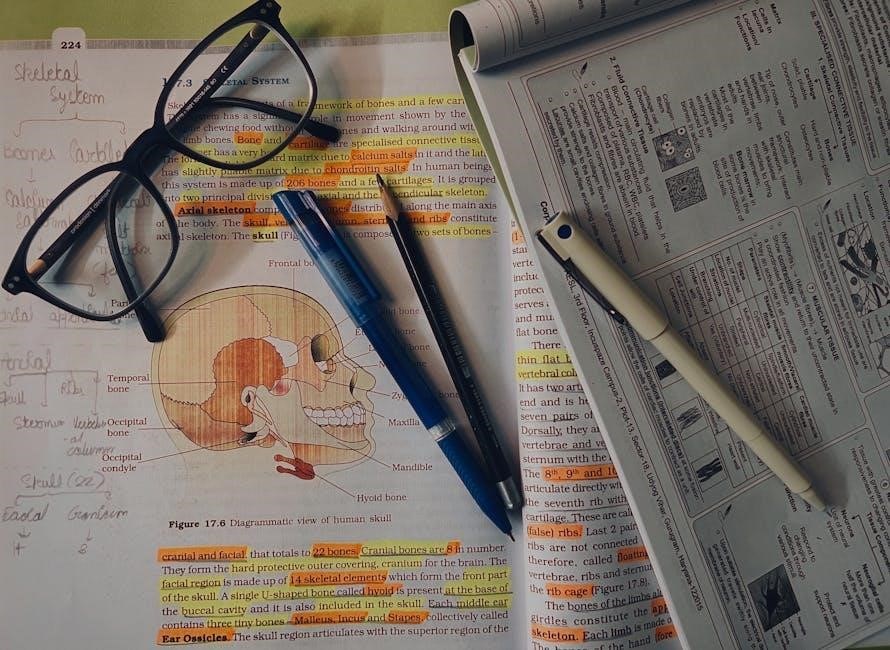
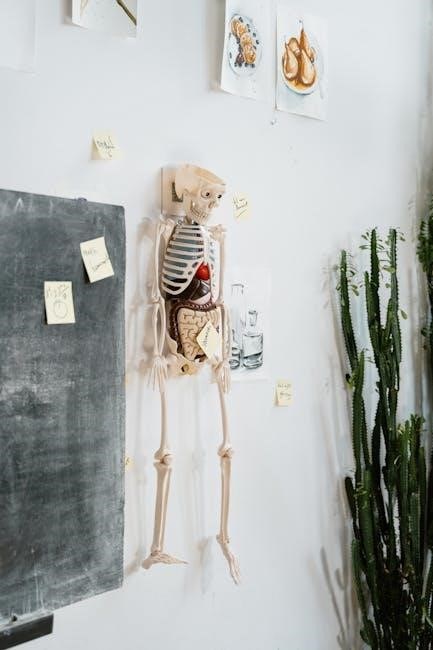
Key systems include skeletal, muscular, nervous, endocrine, cardiovascular, respiratory, digestive, urinary, and reproductive. Each system contributes to maintaining homeostasis, adapting to environments like Chennai or Kolkata.
Understanding these systems – their interdependencies and regulatory mechanisms – is crucial for a comprehensive bio final study guide, emphasizing the body’s remarkable complexity and resilience.